
By KMedTrip editorial · Updated · Written with AI assistance · Reviewed by KMedTrip native-speaker review team
This guide is general information, not medical advice. KMedTrip is run by a government-registered foreign patient facilitator (an agency that helps international patients arrange medical care). We do not recommend, rank or receive payment from any hospital or clinic.
Your own surgeon, doctor or dentist will tell you how long you need to recover and when it is safe to fly. The ranges below are broad, general figures from public health sources. They only help you think about how long to stay in Korea. They are not a promise of how your own recovery will go.

Figure 1. What changes how long recovery takes, and the stages of recovery. Factors: ① Type and extent of the procedure. ② Anesthesia. ③ Your health. ④ Skin type and sun exposure. ⑤ Aftercare. Stages: ⑥ Able to walk. ⑦ Fit to fly. ⑧ Final result.
Two people having the “same” procedure can recover at different speeds. Common reasons:
“Recovery” also has stages:
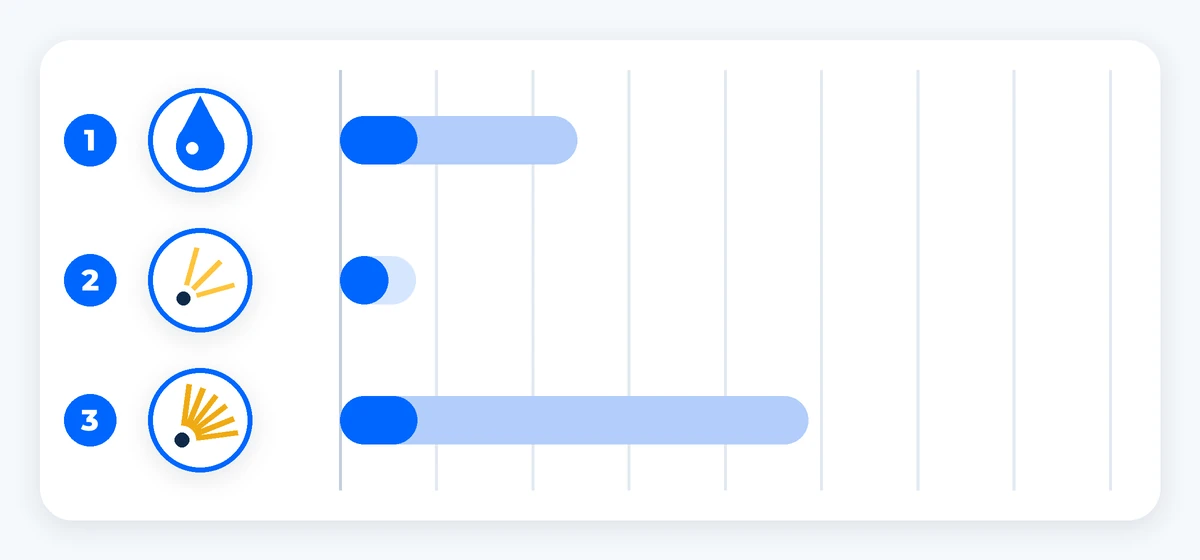
Figure 2. Typical downtime for skin treatments (bar length is relative only). ① Injectables: swelling or bruising settles within a few days; full effect can take up to 2–3 weeks. ② Light peels and gentle laser: a few hours to several days. ③ Medium-deep peels and strong laser: one to several weeks, with crusting for about 7–10 days.
Non-surgical skin treatments often have the shortest downtime. But it still varies:
| Treatment type | Typical downtime | Source (accessed Oct 2026) |
|---|---|---|
| Injectables (such as botulinum toxin or dermal fillers) | Swelling or bruising usually settles within a few days. Botulinum toxin can take a few days to start working and up to 2–3 weeks for its full effect. | NHS |
| Light peels and gentle laser | Downtime from a few hours to a few days. Redness and flaking usually last 3–7 days. | Cleveland Clinic |
| Medium or deep peels, stronger laser resurfacing | One to several weeks. After a medium peel, crusting and peeling last about 7–14 days. A deep peel takes about 14–21 days to heal. After laser resurfacing, crusts usually last 7–10 days, and full healing can take up to 12 weeks. | Cleveland Clinic; NHS Tayside leaflet |
Some words explained:
After injectables, you may be told to avoid rubbing the area, intense exercise, saunas and strong sun for a short time. After laser resurfacing, NHS hospital leaflets advise avoiding direct sun for several weeks. After a deep peel, Cleveland Clinic advises protecting your skin from the sun for 3–6 months.
What this means for your trip:
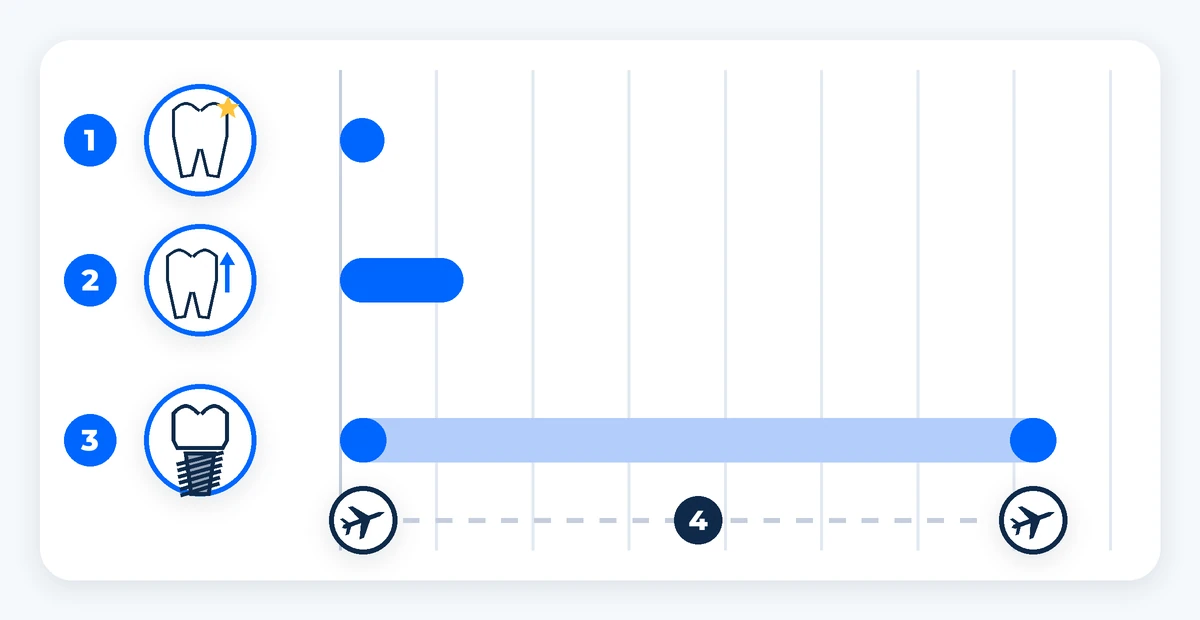
Figure 3. Dental work often needs to be planned in stages. ① Fillings, cleaning and whitening: little or no downtime. ② Extractions: the gum heals over 1–2 weeks. ③ Implants: at least 3 months before the new teeth can be fitted. ④ Implants often mean two or more trips.
Dental treatment often needs to be planned in stages:
| Treatment | Typical healing time |
|---|---|
| Simple fillings, cleaning, whitening | Usually little or no downtime |
| Tooth extraction (pulling a tooth) | The gum usually heals over 1–2 weeks. The bone underneath takes months to fully remodel (reshape). |
| Dental implant (a metal post put into the jawbone to hold a new tooth) | Usually at least 3 months before it can support replacement teeth (Guy’s and St Thomas’ NHS, accessed Oct 2026). Longer if bone grafting (adding bone) is needed. |
So implant treatment abroad commonly involves two or more trips:
Ask the dentist for a written treatment timeline before you book flights. For costs and planning, see our guide on dental implant costs across countries.
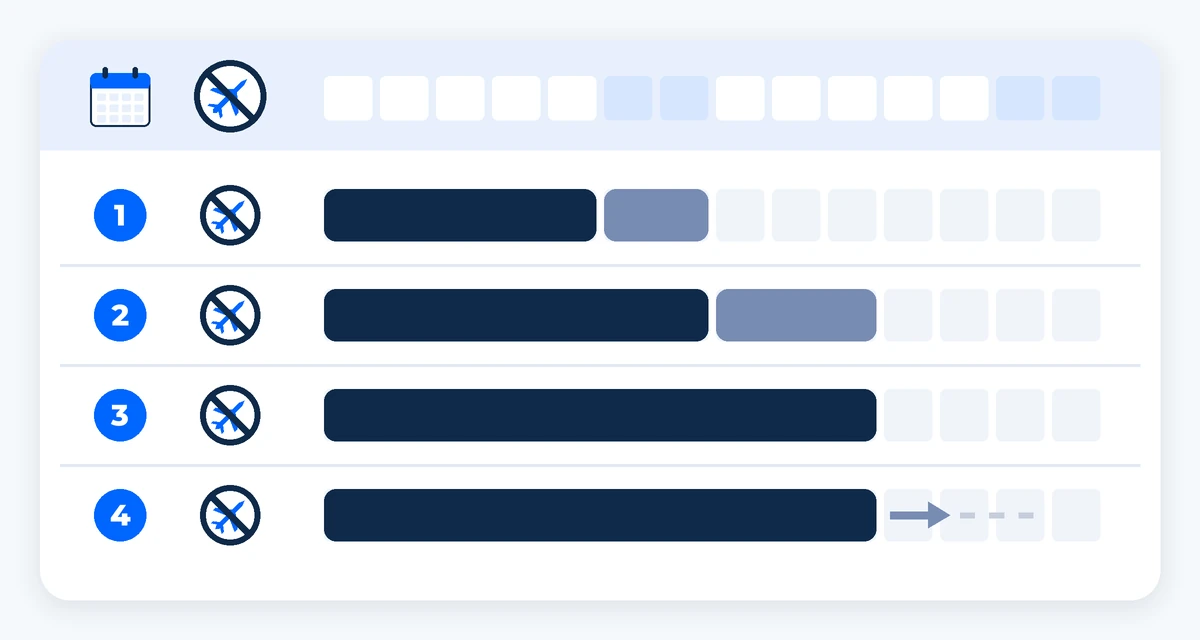
Figure 4. Public guidance on how long not to fly after surgery. ① NHS: breast surgery and liposuction, about 5–7 days. ② NHS: facial cosmetic procedures and tummy tucks, 7–10 days. ③ CDC: chest or abdominal surgery, 10 days. ④ UK government: after a general anesthetic, stay in the country at least 10 days.
For surgery, there are two separate questions:
Air travel and surgery both raise the risk of blood clots (lumps of blood that can block a vein). Public guidance includes:
| Source (accessed Oct 2026) | Procedure | Do not fly for about |
|---|---|---|
| NHS | Breast surgery, liposuction (removing fat by suction) | 5–7 days |
| NHS | Facial cosmetic procedures, tummy tucks | 7–10 days |
| CDC | Chest or abdominal (belly) surgery | 10 days |
| UK government (Travel Aware) | Any surgery with a general anesthetic | Stay in the country at least 10 days |
The NHS advises that after surgery you should rest and avoid alcohol, sunbathing, sightseeing and swimming (NHS, accessed Oct 2026). A post-surgery stay is not a holiday.
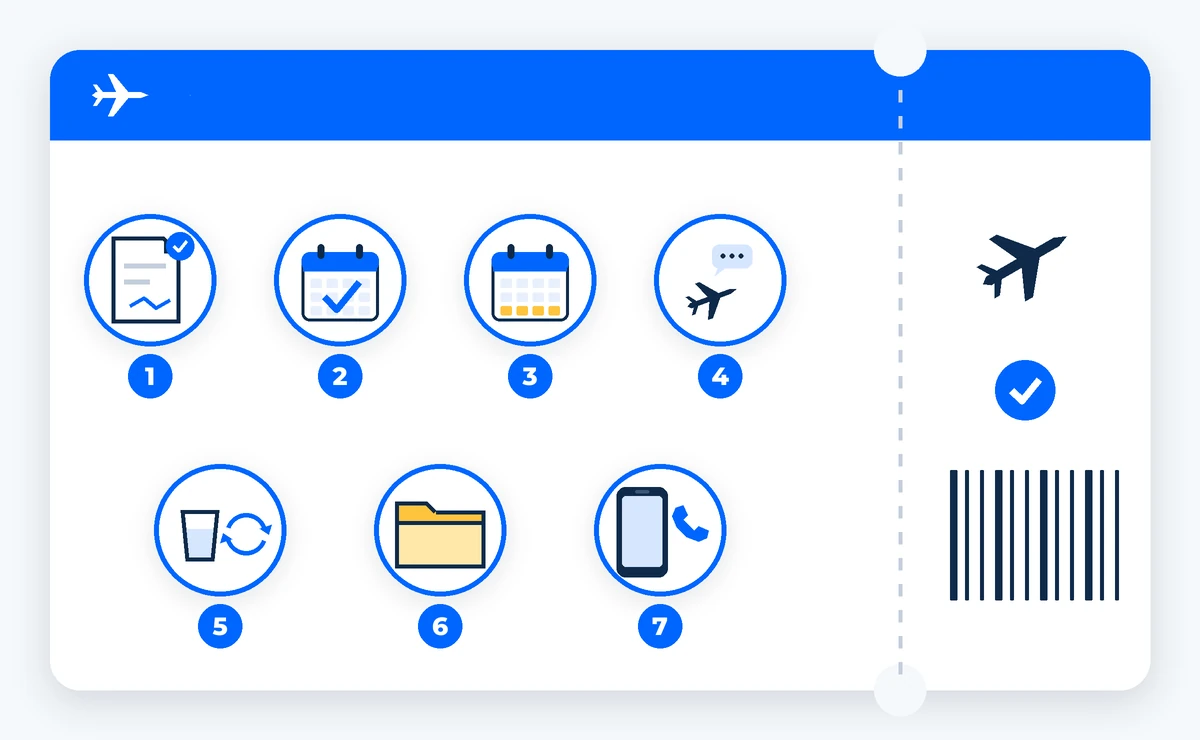
Figure 5. Seven checks before you fly home. ① Fit-to-fly confirmed in writing. ② Book your flight after the last follow-up. ③ Add buffer days. ④ Tell the airline if needed. ⑤ Follow your doctor’s advice on long flights. ⑥ Get your records. ⑦ Know who to contact.
Some practical rules for planning your return:
A simple way to plan your stay length:
| Step | What to do |
|---|---|
| 1 | Ask the clinic for the date of your last follow-up visit. |
| 2 | Check the no-fly guidance above and ask your doctor for your own date. |
| 3 | Take the later of these two dates. |
| 4 | Add a few buffer days. |
| 5 | Check that this date is within the stay your visa or visa-free entry allows (see below). |
| 6 | Book a flight you can change. |
Your recovery plan must fit the number of days you are allowed to stay in Korea. This depends on your nationality and how you enter.
The officially listed purposes of visa-free entry for many countries are things like tourism and business. Treatment is not always named, but that alone does not mean it is banned. Medical Korea lists visa-free entry as one way to come for treatment (checked Oct 2026). Whether it fits your own treatment and recovery time is not confirmed, so if you plan a long treatment stay, ask the Korean embassy whether you need a C-3-3 visa.
How soon can I fly after cosmetic surgery? Public guidance ranges from about 5 to 10 days or more, depending on the surgery (NHS and CDC, accessed Oct 2026). Your surgeon must confirm your own date.
How long should I stay in Korea after a general anesthetic? UK government advice says plan to stay at least 10 days after surgery (Travel Aware, accessed Oct 2026).
Can I go sightseeing while I recover? After surgery, the NHS advises rest and avoiding sightseeing, sunbathing, swimming and alcohol. Treat the stay as recovery time, not a holiday.
Why do dental implants need two trips? The implant usually needs at least 3 months to heal into the bone before new teeth can be fitted (Guy’s and St Thomas’ NHS, accessed Oct 2026).
What if my recovery takes longer than my allowed stay? Act before your stay ends. If illness stops you from leaving, you can apply at an immigration office to postpone your departure date, with a doctor’s note (easylaw.go.kr, accessed Oct 2026). Call 1345 for help.
Will I look normal when I fly home? Not always. Swelling and redness can last weeks or months. Plan for this, and protect your skin from the sun.
If you’d like help planning, you can talk to a coordinator.