
Disclosure: this page contains affiliate links for travel services (not hospitals). We may earn a commission at no extra cost to you.
By KMedTrip editorial · Updated · Written with AI assistance · Reviewed by KMedTrip native-speaker review team
This guide is general information, not medical advice. KMedTrip is run by a government-registered foreign patient facilitator (an agency that helps international patients arrange medical care). We do not recommend, rank or receive payment from any hospital or clinic.
Where you sleep after a procedure matters more than on a normal holiday. You may be tired, swollen or on medicine. You may also feel less steady on your feet.
A good recovery base has three things:
We do not recommend specific hotels. This guide lists what to look for, so you can judge any option yourself. Always follow the aftercare (care after the procedure) instructions your own doctor gives you.
Key takeaways
| Step | What to do | Where | When |
|---|---|---|---|
| 1 | Ask your doctor how many follow-up visits you need, and when you can fly | By email or at the consultation | Before you book flights |
| 2 | Find the address of the place where your follow-ups happen | The institution’s written plan | Before you search for rooms |
| 3 | Search for rooms a short taxi ride or walk away | A booking site or app | After steps 1–2 |
| 4 | Check the room features in this guide | The listing, or ask the host by message | Before you pay |
| 5 | Choose free cancellation or flexible dates | The booking terms | When you book |
| 6 | Save the address in Korean and English, offline | Your phone | Before you fly |
| 7 | Save the help numbers in this guide | Your phone | Before you fly |
Prices depend on the area, season and room type. We do not list prices for specific hotels. As a rough guide: in 2025, foreign tourists spent on average 520,094 won per person per trip on accommodation in Seoul. They stayed 4.9 nights on average (Seoul Tourism Organization, 2025 Seoul tourism survey, checked Oct 2026). This is average spending per person, not a room price. A recovery trip usually needs more nights.
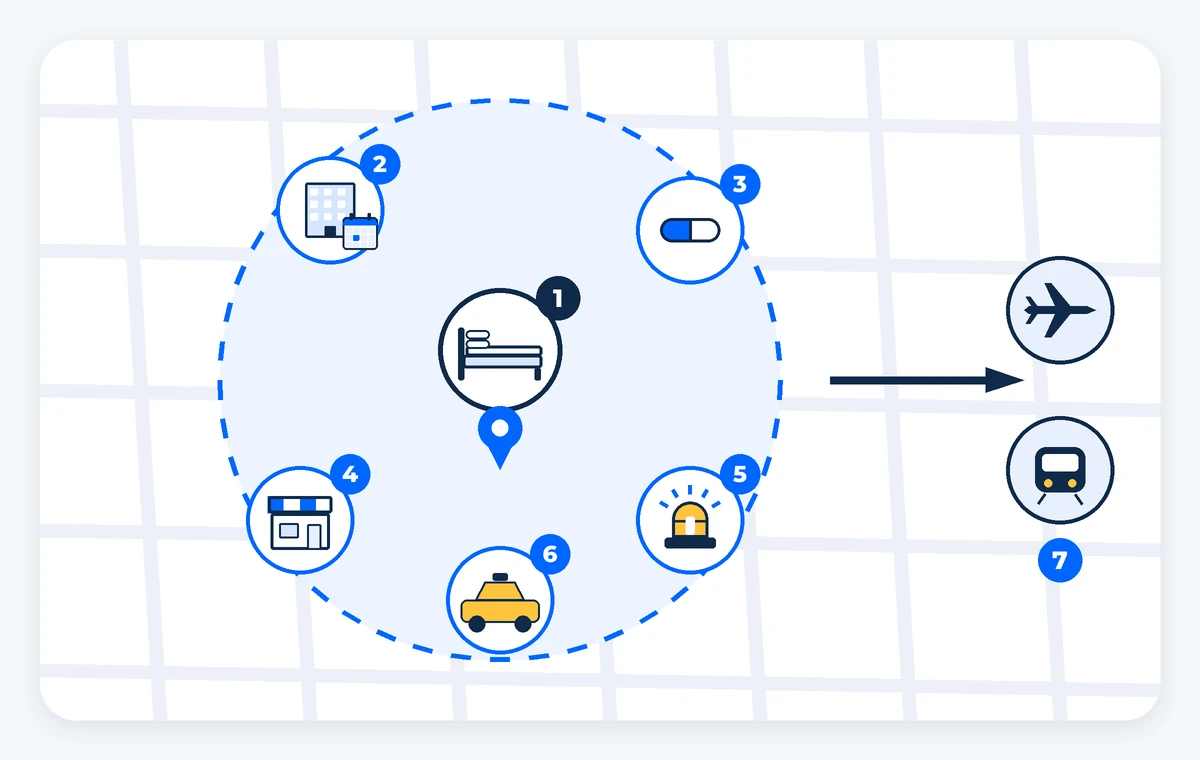
Figure 1. What to look for near your stay. ① Your stay. ② Follow-up visits within a short ride. ③ Pharmacy. ④ Convenience store. ⑤ Emergency room in the area. ⑥ Taxi-friendly entrance. ⑦ Bus or rail link to the airport.
Useful things within a few minutes’ walk:
You may fly soon after your last visit. If so, check:
See our guide on getting from Incheon Airport to Gangnam for transport details.
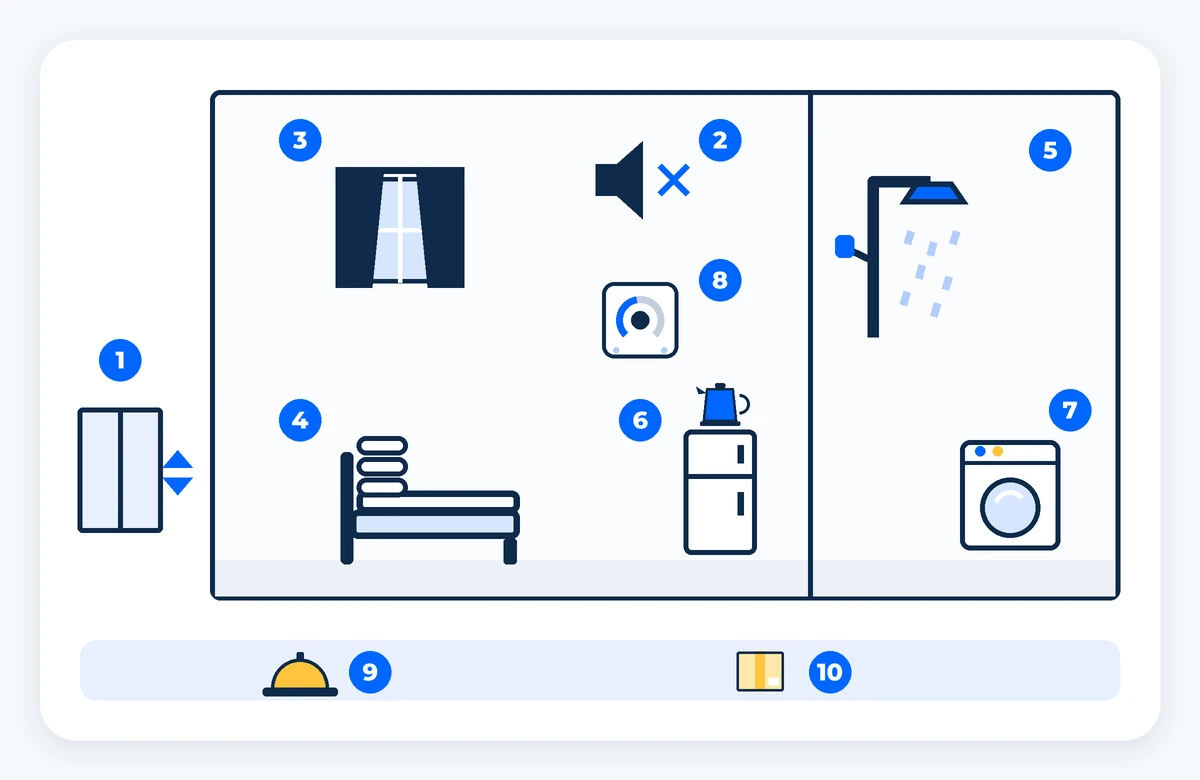
Figure 2. Room features that help recovery. ① Lift access. ② Quiet room. ③ Blackout curtains. ④ Bed and extra pillows. ⑤ Walk-in shower with a handheld head. ⑥ Fridge and kettle. ⑦ Laundry. ⑧ Heating, cooling and humidity control. ⑨ 24-hour reception or host. ⑩ Delivery access.
Not every feature matters for every procedure. Ask your doctor which ones apply to you.
| Feature | Why it helps | How to check |
|---|---|---|
| Lift | Stairs can be hard after surgery, especially with luggage | Look for “elevator” in the listing |
| Quiet room | You need rest | Ask for a room away from the street, the lift and any bar |
| Blackout curtains | You may sleep during the day | Check photos or ask the host |
| Bed and pillows | Some procedures need you to sleep with your head raised | Ask for extra pillows |
| Walk-in shower | Safer than a bathtub. A handheld shower head helps keep a wound dry | Check bathroom photos |
| Fridge and kettle | For cold packs, medicine that must stay cool, and soft or warm food | Check the amenities list |
| Laundry | Useful on longer stays | Ask about a washing machine or laundry service |
| Temperature control | Heating, cooling and humidity you can adjust in your own room | Ask the host |
| 24-hour help | Important if you need help at night | Look for a 24-hour front desk, or a host who replies fast |
| Delivery access | Food delivery riders must reach your door or lobby | Ask the host |
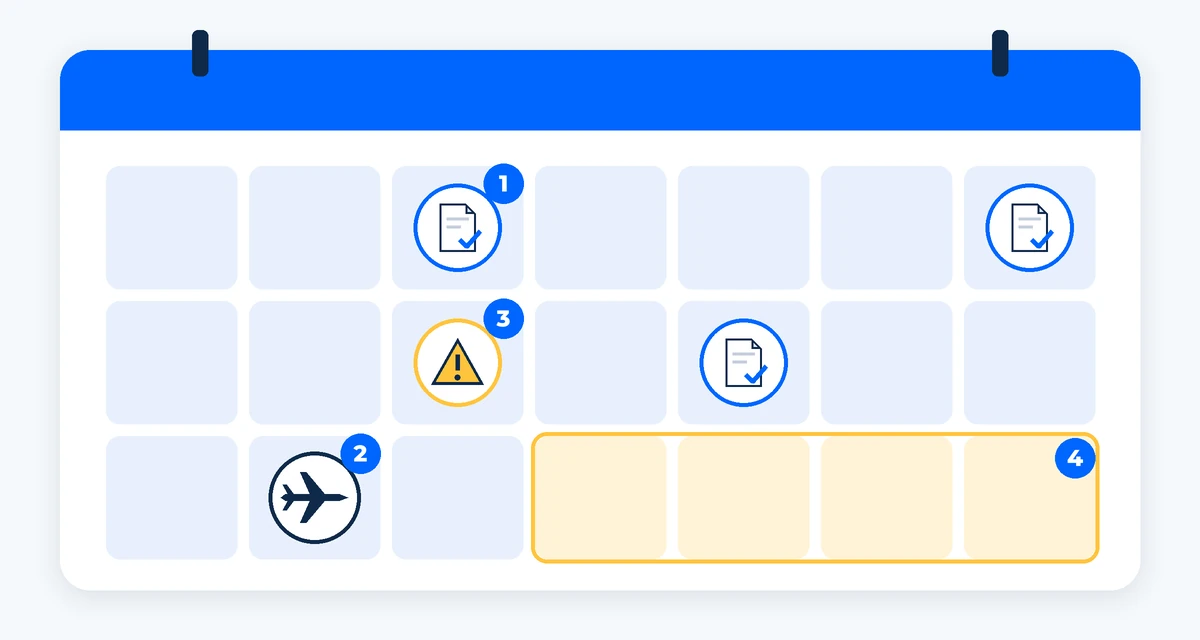
Figure 3. Three questions that set your length of stay, plus buffer days. ① When are my follow-up visits? ② When is it safe to fly? ③ What if swelling or pain lasts longer? ④ Buffer days (spare days in case you need more time).
How long you stay depends on your procedure, your health and your doctor’s advice. Ask your doctor these questions before you book flights:
Many people plan a buffer of a few extra days, in case the doctor wants another check. See our guide on recovery time by procedure for general ranges. Treat your own doctor’s advice as final.
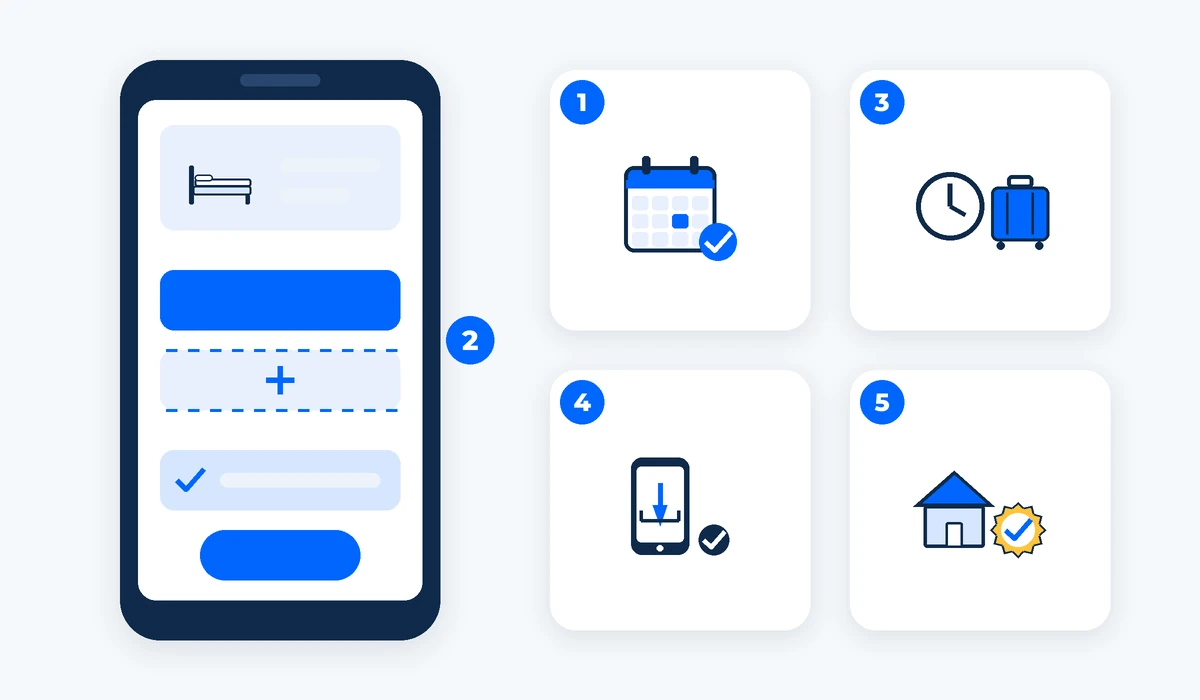
Figure 4. How to keep your booking flexible. ① Free cancellation or flexible dates. ② Book in two parts. ③ Check-in time and luggage storage. ④ Keep confirmations offline. ⑤ Choose registered accommodation.
Plans change. A follow-up may move, or you may need more rest.
How it works in Seoul:
(Visit Seoul; Enforcement Decree of the Tourism Promotion Act, Article 2, law.go.kr; checked Oct 2026)
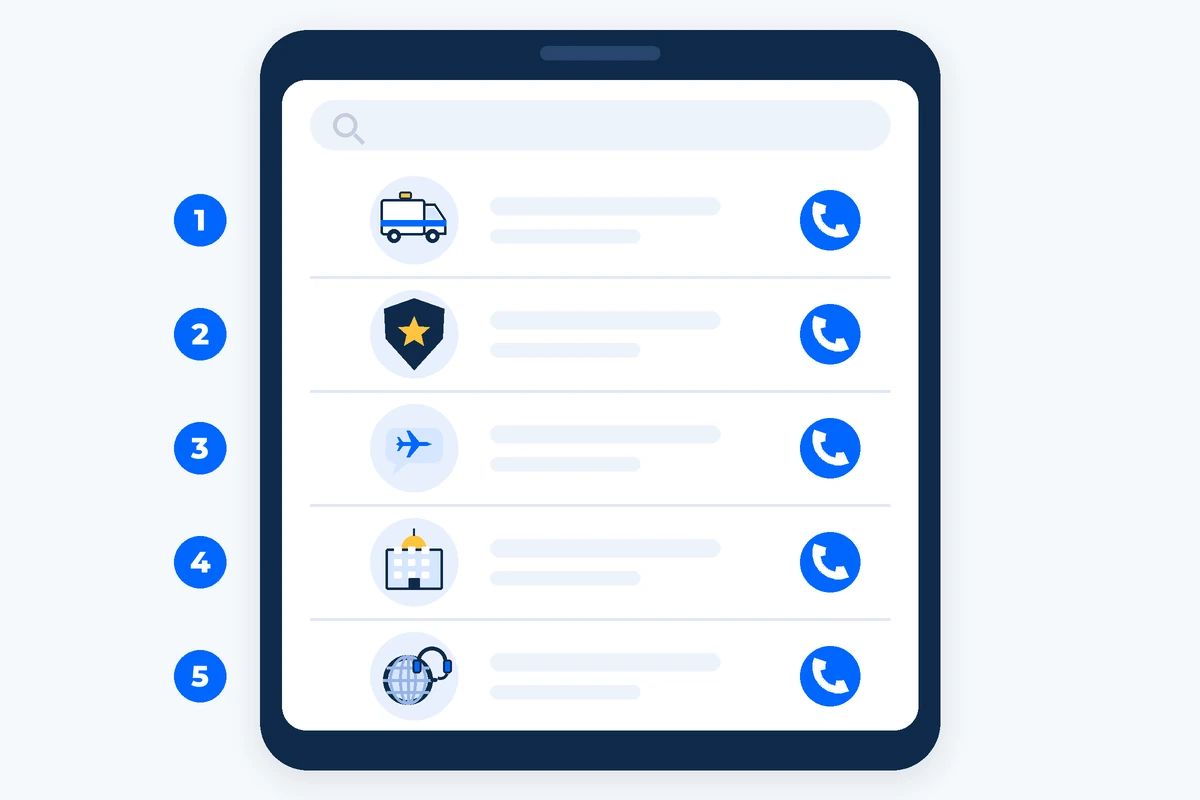
Figure 5. Five numbers to save before you arrive. ① 119 – ambulance and fire. ② 112 – police. ③ 1330 – Korea Travel Hotline. ④ 02-120 – Seoul Dasan Call Center. ⑤ +82-2-1577-7129 – Medical Korea Information Center.
Save these before you arrive.
| Number | What it is | Languages and hours |
|---|---|---|
| 119 | Ambulance and fire (emergency) | — |
| 112 | Police | — |
| 1330 | Korea Travel Hotline, run by the Korea Tourism Organization. Interpretation and travel help | Korean, English, Chinese and Japanese 24 hours. Russian, Vietnamese, Thai, Malay and Indonesian 08:00–19:00 (Seoul Metropolitan Government and district offices, as of Oct 2026) |
| 02-120 | Seoul 120 Dasan Call Center (city information line). Press 9 for foreign languages | English, Chinese, Japanese, Vietnamese and Mongolian. Weekdays 09:00–18:00, not public holidays. It is not a 24-hour line for foreign languages (Seoul Metropolitan Government, Sep 2026) |
| +82-2-1577-7129 | Medical Korea Information Center for foreign patients | English, Chinese, Japanese, Russian and Korean. Daily 09:00–18:00 Korea time (Medical Korea, as of Oct 2026) |
Also:
How close should I stay to my clinic? Close enough for a short taxi ride or walk. Avoid trips with several subway transfers or long stairs.
Hotel or serviced apartment? Both can work. A hotel front desk helps in the first nights. A serviced apartment with a kitchen helps on a longer stay.
How many nights should I book? Ask your doctor about follow-up dates and when you can fly. Then add a few buffer days. Choose free cancellation where possible.
Is it safe to book an unregistered short-term rental? It is risky. Short-stay lodging in Korea is meant to be registered, and unregistered listings can be canceled at short notice (The Korea Times, Aug 2025). Ask the host for the registration, or choose a hotel.
What number do I call in an emergency? Call 119 for an ambulance. For help with interpretation, call 1330. See also our interpreter guide.
If you’d like help planning, you can talk to a coordinator.