
By KMedTrip editorial · Updated · Written with AI assistance · Reviewed by KMedTrip native-speaker review team
This guide is general information, not medical advice. KMedTrip is run by a government-registered foreign patient facilitator (an agency that helps international patients arrange medical care). We do not recommend, rank or receive payment from any hospital or clinic.
Clear communication is part of safe care. You need to understand the risks, the cost and the aftercare (care after treatment). The doctor needs to understand your medical history.
If you do not speak Korean, plan your interpreting before you arrive. Do not leave it to the day of your visit.
Key takeaways
| Step | What to do | Where | When |
|---|---|---|---|
| 1 | Ask the institution if it has an interpreter for your language | Email or phone to the institution | When you first contact them |
| 2 | If not, ask a public service for help | Medical Korea Information Center, 1330 or Seoul Medical Tourism (see below) | At least 7 days before your visit for Seoul Medical Tourism |
| 3 | Confirm the interpreter, the fee and the hours in writing | Before you fly | |
| 4 | Send your medical history and questions ahead | Email to the institution and interpreter | A few days before the visit |
| 5 | Use the interpreter for the consultation, consent and aftercare talk | The institution | On the day |
| 6 | Save the after-hours contact | Your phone | Before you leave the institution |
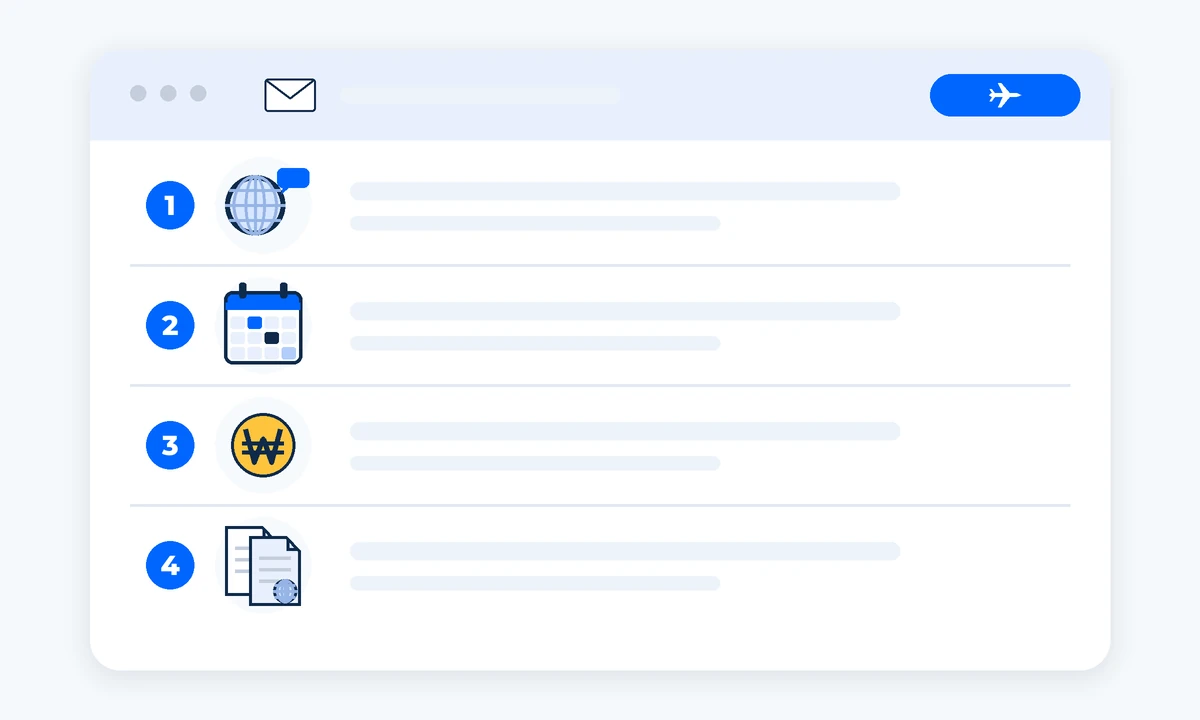
Figure 1. Four questions to ask the institution first. ① Is there an interpreter for my language? Staff or outside service? ② Will they be there at the consultation, the procedure and follow-ups? ③ Is there a fee for interpreting? ④ Are the consent form and aftercare instructions in my language?
According to VISITKOREA, most hospitals that treat foreign patients have an interpreter or an international patient coordinator (a staff member who helps foreign patients) (VISITKOREA, as of Oct 2026).
Before you book, ask by email or phone:
Get the answers in writing. If interpreting is only available on some days, plan your appointments around those days.
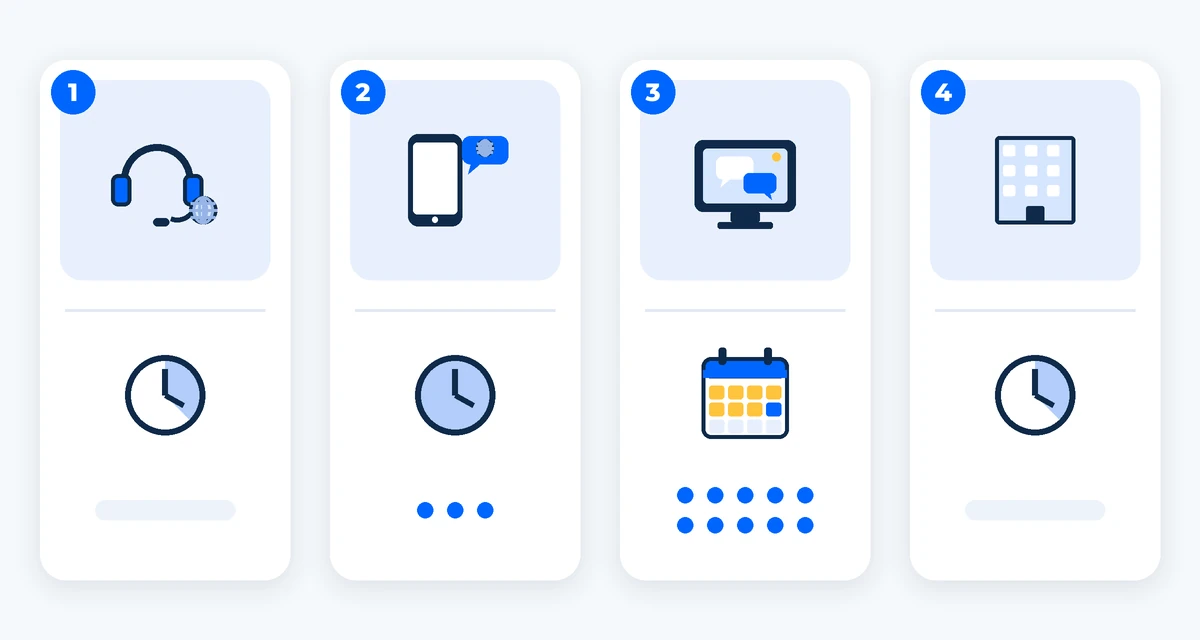
Figure 2. Four public options. ① Medical Korea Information Center: +82-2-1577-7129, 09:00–18:00. ② 1330: Korean, English, Chinese and Japanese 24 hours. ③ Seoul Medical Tourism: about 10 languages, request 7 days ahead. ④ District medical tourism centers.
If the institution cannot interpret for you, these public services may help.
| Service | Contact | Languages and hours | Notice needed | Cost |
|---|---|---|---|---|
| Medical Korea Information Center | +82-2-1577-7129 | English, Chinese, Japanese, Russian. Daily 09:00–18:00 Korea time | — | Phone help is free; normal call rate. Ask about any interpreter fee |
| 1330 Korea Travel Hotline | Dial 1330 (from abroad +82-2-1330) | Korean, English, Chinese, Japanese 24 hours. Russian, Vietnamese, Thai, Malay, Indonesian 08:00–19:00 | None | Free online call over Wi-Fi; normal call rate by phone |
| Seoul Medical Tourism interpretation | medical.visitseoul.net | About 10 languages, including English, Chinese, Japanese and Mongolian | At least 7 days (5 in some cases) | Fee support only at partner institutions. Elsewhere, agree the fee with the interpreter |
| District medical tourism centers | Varies by district | Varies | Varies | Varies |
(Sources: Medical Korea, VISITKOREA, Seoul Metropolitan Government, district offices and Seoul Medical Tourism, as of Oct 2026)
This is a public information center for foreign patients. It is run by the Korea Health Industry Development Institute (KHIDI, a government health agency). It gives information on medical services, visas, complaints and disputes. It can help connect you with interpreting.
(Medical Korea and Incheon Airport, as of Oct 2026)
When needed, the center can connect you with a medical interpreter in English, Chinese, Japanese or Russian (Ministry of Health and Welfare, checked Oct 2026). The official pages do not state a fee for this. Ask when you call.
(Seoul Metropolitan Government, district offices and VISITKOREA, as of Oct 2026)
It is useful for practical situations. It does not replace a medical interpreter during consent.
(Seoul Medical Tourism, as of Oct 2026)
Some Seoul districts with many clinics run their own information centers for foreign patients. They may help with language support.
Since 7 May 2025, the Seoul city government has offered a medical interpretation service for foreign residents and multicultural families. You request it through the Seoul Global Center. It needs at least three working days’ notice, not counting weekends and holidays (Seoul Metropolitan Government, May 2025). It is for residents, not short-term medical travelers.
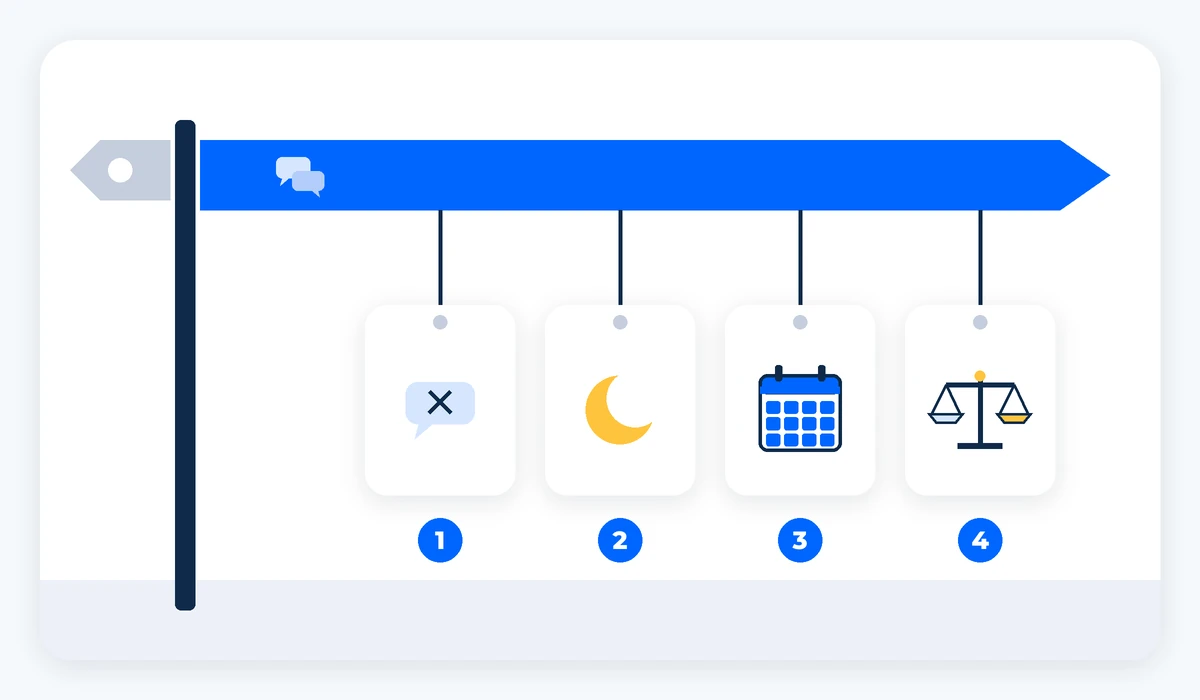
Figure 3. When to bring your own interpreter. ① No interpreter for your language. ② Surgery, general anesthesia or a complex plan. ③ You want support at every visit. ④ You are not comfortable with in-house staff interpreting the risks.
Consider your own trained interpreter when:
A family member who speaks some Korean can be a great support. But medical words are hard even for fluent speakers. For the consent discussion, a trained medical interpreter is safer.
Be careful with anyone who offers to interpret for free and then steers you to a particular clinic. Unregistered brokers (people who arrange patients without registration) sometimes use this approach. See our guide on avoiding medical brokers.
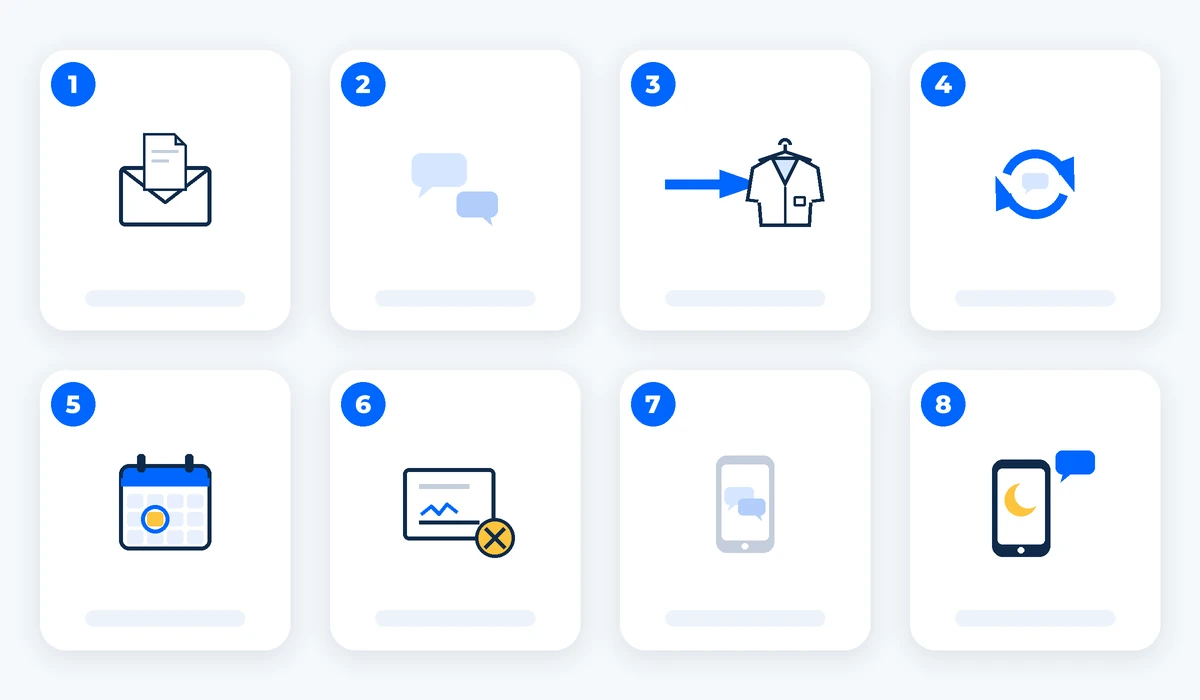
Figure 4. Eight tips for clear communication. ① Send documents ahead. ② Speak in short sentences. ③ Talk to the doctor. ④ Ask for repeat-back. ⑤ Check numbers in writing. ⑥ Don’t sign what you don’t understand. ⑦ Use apps only as backup. ⑧ Keep the after-hours contact.
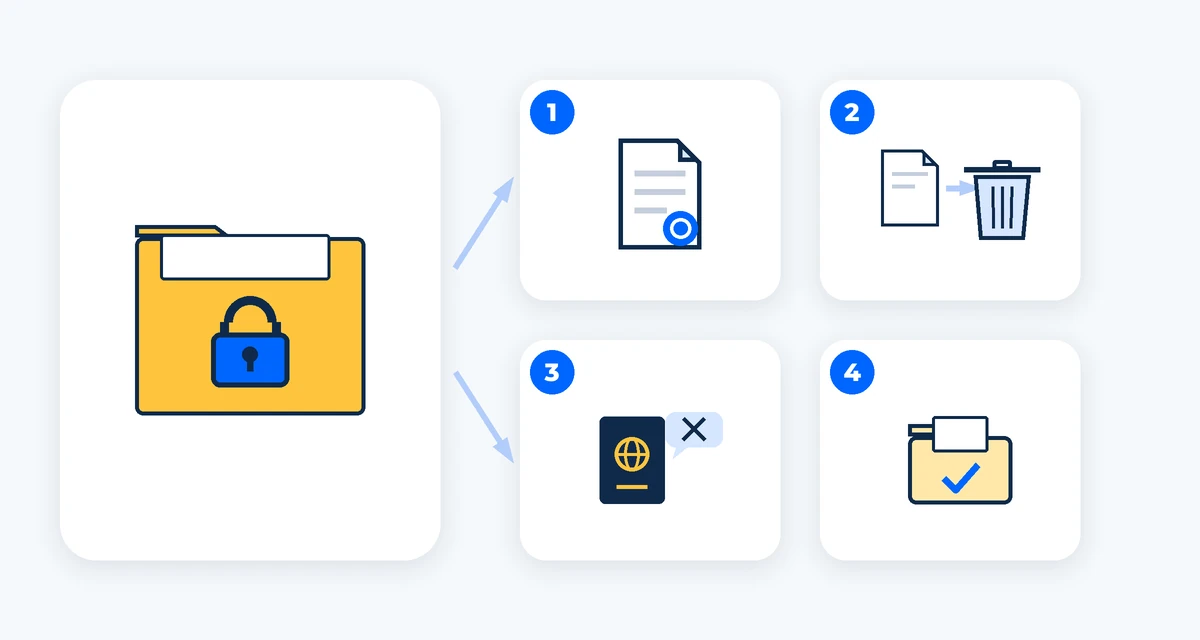
Figure 5. Four privacy checks. ① Is there a confidentiality agreement? ② How are documents stored and deleted? ③ Avoid sending your passport or records through messenger apps. ④ Share only what is needed.
Your interpreter will hear your diagnosis, history and other private details. Before you start:
Korea has a Personal Information Protection Act. Health information is treated as sensitive. If you are worried about how your data was handled, raise it with the institution first.
If that does not help, anyone can report a privacy problem to Korea’s Personal Information Protection Commission (PIPC):
(PIPC, checked Oct 2026)
Do Korean hospitals provide interpreters? Many that treat foreign patients do, according to VISITKOREA (as of Oct 2026). Ask the institution before you book, and get the answer in writing.
Is interpreting free? It depends. Some institutions include it, and some charge. Seoul Medical Tourism may need a fee agreed directly with the interpreter outside its partner network (as of Oct 2026). Always ask first.
How early should I book? For Seoul Medical Tourism, at least 7 days ahead (5 days in some cases) (as of Oct 2026). For other services, book as early as you can.
Can I use 1330 during my consultation? 1330 can interpret by phone for practical things. It is not a replacement for a medical interpreter during consent. If you need help planning questions, see questions to ask before a consultation.
Can I just use a translation app? Use apps only as a backup. They can make serious mistakes with medical terms.
Can my Korean-speaking friend interpret? A friend can support you. For consent and risks, a trained medical interpreter is safer.
If you’d like help planning, you can talk to a coordinator.