By KMedTrip editorial · Updated · Written with AI assistance · Reviewed by KMedTrip native-speaker review team
This guide is general information, not medical advice. KMedTrip is run by a government-registered foreign patient facilitator (an agency that helps international patients arrange medical care). We do not recommend, rank or receive payment from any hospital or clinic.
For almost ten years, foreign visitors could claim back the VAT (value-added tax, a sales tax added to the price) on many cosmetic and skin procedures in Korea.
That scheme ended on 31 December 2025. As of October 2026, it has not come back. The current law still shows the end date of 31 December 2025. Bills to bring it back were proposed in the National Assembly (Korea’s parliament), but none has become law (law.go.kr and Ministry of Economy and Finance, checked Oct 2026).
This guide explains:
Tax rules change. Always confirm the current position before you rely on any refund.
Key takeaways
| Step | What to do | Where |
|---|---|---|
| 1 | Plan your budget on the full price, including 10% VAT | Your own budget |
| 2 | Ask whether the quote includes VAT | In writing, by email, from the institution |
| 3 | Do not count on a refund | — |
| 4 | If you hear the refund is back, check official sources | Ministry of Economy and Finance, Ministry of Health and Welfare, Medical Korea |
| 5 | Ask questions about old refund documents | Medical Korea Information Center, +82-2-1577-7129 |
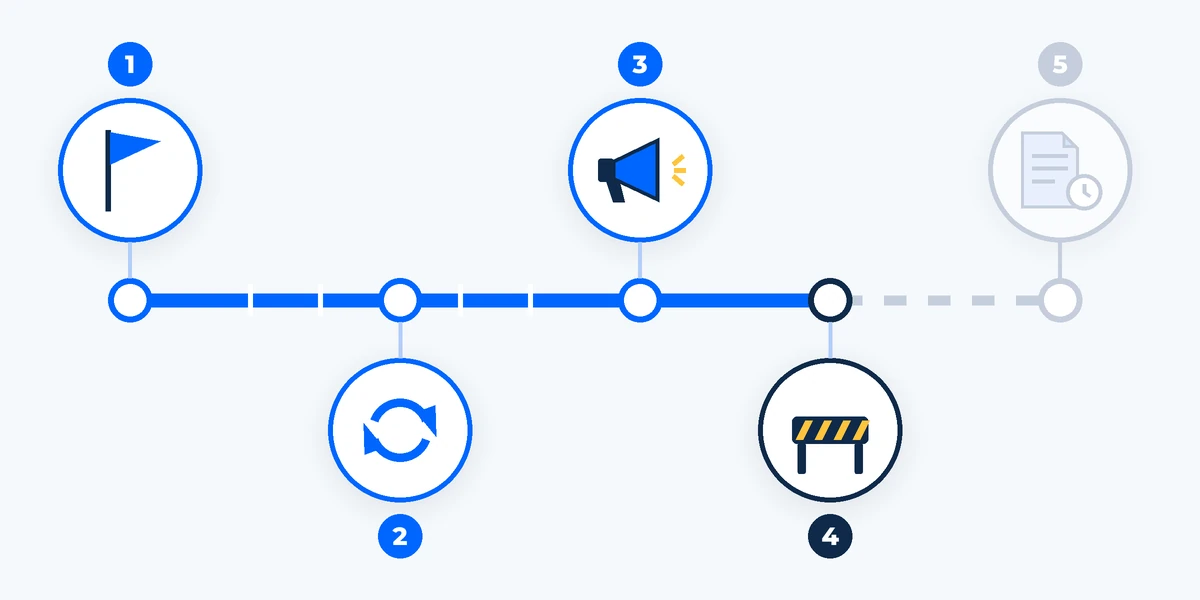
Figure 1. Timeline of the VAT refund scheme. ① April 2016: scheme introduced. ② Extended several times. ③ July 2025: expiry announced. ④ 31 December 2025: scheme ended. ⑤ 2026: revival bills under discussion (not law).
In 2026, members of both the ruling and opposition parties proposed changes to the Restriction of Special Taxation Act (the Korean law that sets temporary tax breaks).
| Bill | Proposed end date | Status |
|---|---|---|
| Bill from a Democratic Party member | 31 December 2027 | Sent to a subcommittee of the National Assembly’s finance committee for review on 29 July 2026 (Hankyung, 31 July 2026) |
| Bill from a People Power Party member | 31 December 2029 | Introduced in August 2026 (Hankyung, 14 August 2026) |
As of October 2026, neither bill has passed. The version of the Restriction of Special Taxation Act in force since 18 September 2026 still ends the refund on 31 December 2025. The Ministry of Economy and Finance’s 2026 tax revision plan does not revive it either (law.go.kr, Art. 107-3; Ministry of Economy and Finance; checked Oct 2026). Until a law is passed and takes effect, there is no refund for new procedures.

Figure 2. Which procedures the old scheme covered. ① Cosmetic procedures: 10% VAT, which used to be refundable. ② Eyelid and nose surgery. ③ Liposuction and body contouring. ④ Cosmetic breast surgery. ⑤ Skin procedures. ⑥ Reconstructive or medically necessary care: already exempt from VAT.
In Korea, most medical care is exempt from VAT (no VAT is charged). Cosmetic procedures are an exception. They are generally charged 10% VAT (Ministry of Health and Welfare, 2016; Enforcement Decree of the VAT Act, Art. 35; as of Oct 2026). The old scheme let foreign tourists claim that VAT back.
Under the old rules, eligible services included many cosmetic surgery and dermatology (skin care) procedures, for example:
The exact list of procedures that carry VAT is in Article 35 of the Enforcement Decree of the VAT Act. Besides the surgery above, it includes, for example, cosmetic dental work (teeth whitening, laminate veneers, gum contouring), hair removal, hair-loss treatment and hair transplant (law.go.kr, checked Oct 2026). The old scheme refunded VAT on procedures from this list.
Reconstructive (repairing the body after injury or illness) and medically necessary procedures were generally not included. They were already exempt from VAT. Dental implants and health checkups are not on the list. So VAT is usually not charged on them, and there was nothing to refund. If unsure, ask the clinic to state in writing whether VAT is in the price.
Other limits under the old scheme:
Under the old scheme, you usually needed:
| Document | What it is |
|---|---|
| Passport | Showed you were a foreign tourist who is not a Korean resident (not working in Korea and not living there for six months or more) |
| Medical service supply confirmation | The refund document from the participating institution |
| Receipt | Proof of payment for the procedure |
Who could claim was set by Article 107-3 of the Restriction of Special Taxation Act and Article 109-3 of its Enforcement Decree (law.go.kr, checked Oct 2026). The law and decree do not set a minimum payment. Press reports mentioned a minimum of KRW 30,000, but we found no official source for it.
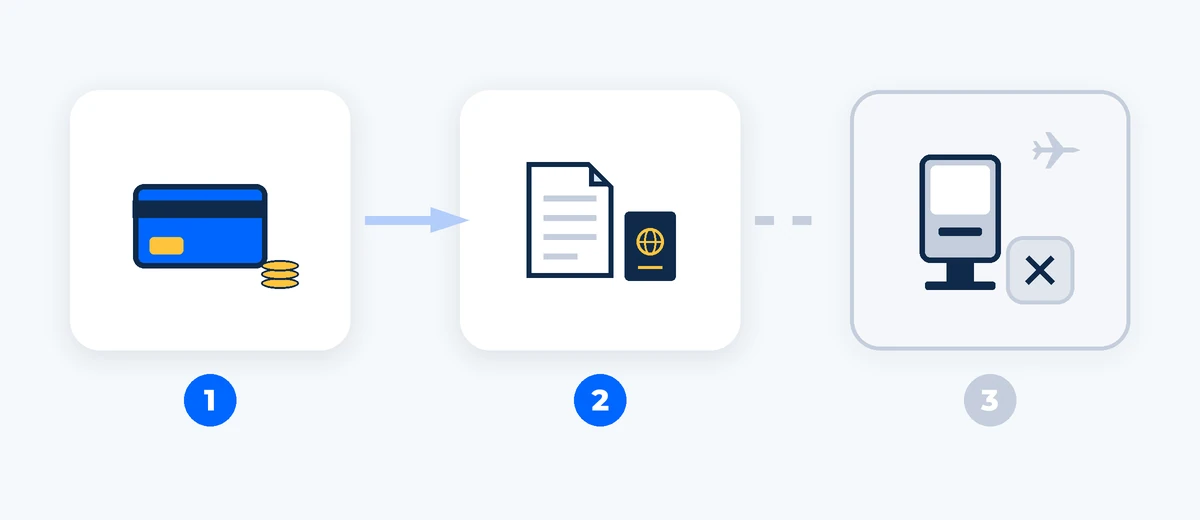
Figure 3. How the old claim worked (no longer available). ① Pay the full price, including VAT. ② Ask for the refund document. ③ Claim at an airport or seaport kiosk when leaving Korea.
Under the old scheme, tax refund operators (private companies that handle tax-free refunds) handled the refund. It worked much like tax-free shopping:
This process does not work for procedures done from 1 January 2026.
The Medical Korea Information Center (+82-2-1577-7129, 09:00–18:00 Korea time, as of Oct 2026) supported foreign patients with questions about the refund system. It is still a good first contact for questions about refund documents.
Under the old scheme, you had to claim within three months of the procedure date (Restriction of Special Taxation Act, Art. 107-3(3), law.go.kr, checked Oct 2026).
The scheme ended on 31 December 2025. So the three-month window for procedures in late 2025 has also passed (it closed by the end of March 2026).
The law has no exception to this deadline. We found no official notice about accepting late claims (October 2026). If you claimed on time but did not get your money, contact:
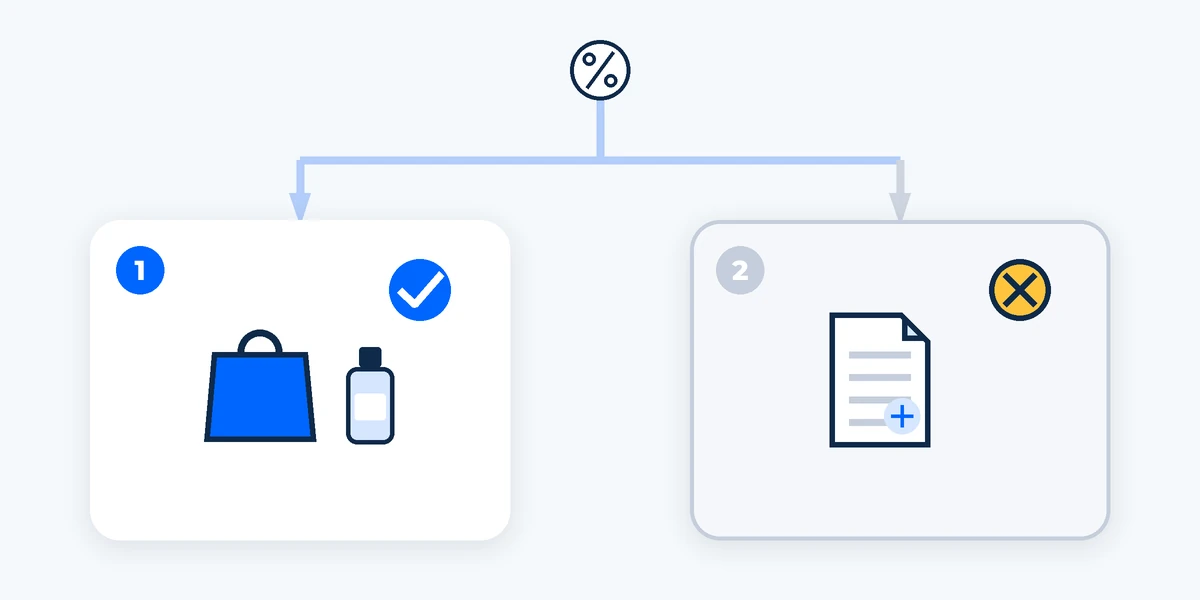
Figure 4. Goods and procedures are treated differently. ① Goods (tax-free shopping): still applies. ② Medical procedures: not covered.
The tax refund for goods you buy at participating shops is a different system. Goods include things like cosmetics or clothing.
Main conditions (law.go.kr, checked Oct 2026):
| Condition | Rule |
|---|---|
| Who can claim | A foreign visitor who is not a Korean resident (not living in Korea for six months or more, and not working there) |
| Minimum purchase | 15,000 won per receipt, including tax |
| Instant refund in the shop | If one purchase is under 1,000,000 won, and the trip total is 5,000,000 won or less |
| Time limit | Take the goods out of Korea within 3 months of purchase |
| Where to claim | When you leave: show the goods and receipt at customs in the airport or port, then get the money at the refund operator’s counter or kiosk |
For paying and changing money in Korea, see our money and payment guide.
Can I still get a VAT refund on cosmetic procedures in 2026? No. The scheme ended on 31 December 2025. As of October 2026, no revival bill has become law.
Will the refund come back? Maybe. Two bills were proposed in 2026, one to 2027 and one to 2029. Neither had passed as of October 2026, and the government’s 2026 tax plan does not include it (Hankyung, July and August 2026; Ministry of Economy and Finance).
If it comes back, will it apply to my procedure from earlier in 2026? Nobody knows yet. A new law would set its own start date and rules. Do not budget on it.
Does tax-free shopping still work? Yes, for goods at participating shops, when you meet the conditions (for example, at least 15,000 won per receipt). It never covered medical procedures.
Is VAT already in the price I am quoted? It depends on the institution. Ask in writing whether the quote includes the 10% VAT. See our guide on skin treatment price ranges for how to ask for a quote.
I had a procedure in 2025. Can I still claim? The three-month window for late-2025 procedures has passed, and the law has no exception. If you claimed on time but were not paid, contact the refund operator on your document, or the Medical Korea Information Center.
If you’d like help planning, you can talk to a coordinator.